

Dubai is a global travel hub known for its skyscrapers, luxury lifestyle, and remarkable safety. Yet, beneath its modern image lies a culture rooted in deep Islamic traditions. For women visiting or living in Dubai, understanding and respecting local customs and laws is essential.
Whether you’re a solo traveler, an expat professional, or visiting with family, this guide explains Dubai’s rules for women, including dress codes, legal rights, public conduct, and the possible penalties for breaking the law.
1. Women’s Legal Rights in Dubai

Contrary to many misconceptions, women in Dubai enjoy a range of legal rights under the UAE Constitution.
Employment and Equal Pay
Women can work in almost all industries, from banking and hospitality to technology. The UAE Labor Law ensures equal pay for equal work. Many local women hold high-ranking positions — for instance, Her Excellency Reem Al Hashimy serves as Minister of State for International Cooperation.
Example: A female engineer working in a Dubai-based company is legally entitled to the same pay and benefits as her male colleague performing the same role.
Property Ownership and Inheritance
Women have full rights to own, buy, and inherit property in the UAE. You can own apartments, invest in real estate, or even run your own business.
Education and Driving
Women can study in universities, get professional degrees, and drive freely. In fact, over 70% of university graduates in the UAE are women.
Personal Status Laws
Certain areas, such as divorce or child custody, may still require the consent of a male guardian or follow Sharia-based laws. Expats can choose to have such cases handled under their home country’s laws if they wish.
2. Dubai Dress Code Rules for Women
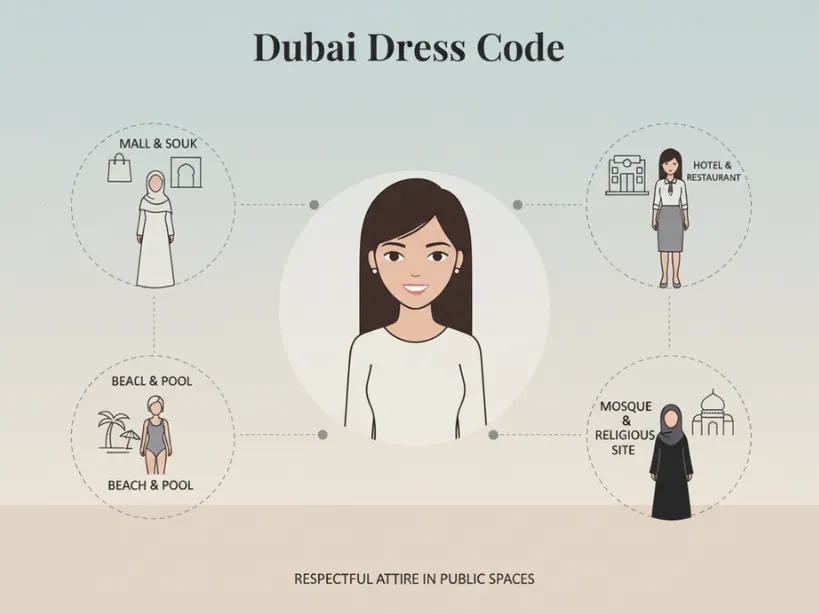
Dubai is modern but still conservative in public spaces. Dressing modestly is a sign of respect, not restriction.
General Dress Code
- Shoulders and knees should be covered in malls, restaurants, and public transport.
- Avoid sheer, tight, or revealing outfits.
- Swimwear and bikinis are allowed only at beaches, pools, or private resorts.
Example: Wearing a crop top and short skirt while walking in a shopping mall can result in a warning or fine for “indecent exposure.”
Penalty: In extreme cases, violating the public decency law can lead to a fine of up to AED 5,000 or a short detention, though tourists are usually warned first.
3. Public Conduct and Behavior

Dubai expects public behavior to reflect respect and modesty. Even tourists are expected to follow these norms.
Public Displays of Affection
Kissing, hugging, or intimate touching in public are considered offensive acts. Even holding hands should be limited to married couples.
Example: A tourist couple was fined for kissing in a public park in 2019.
Penalty: Public affection can attract fines up to AED 3,000 or a brief jail term in serious cases.
Alcohol Consumption
Alcohol is available in licensed bars, hotels, and private clubs only. Drinking in public, on the beach, or while driving is illegal.
Example: Being found intoxicated on a public street could lead to arrest or deportation for foreigners.
Penalty: Public drunkenness carries fines up to AED 2,000 and potential jail time.
Photography Rules
Taking photos of people, especially women, without consent is a criminal offense. This includes photos taken “by accident” that capture others in the frame.
Penalty: Fines range from AED 150,000 to AED 500,000, and in some cases, imprisonment. Always ask before taking pictures in public.
4. Visiting Religious Sites
If you visit mosques or religious areas, it’s mandatory for women to cover their heads, arms, and legs. Many mosques provide abayas or scarves at the entrance.
Example: A tourist entering Jumeirah Mosque without a head covering will politely be asked to wear one before entering.
Tip: Carry a light scarf in your bag — it’s practical and shows cultural respect.
5. Health and Contraception Laws
Dubai has strict laws concerning reproductive health.
- Morning-after pills require a doctor’s prescription and are not available over the counter.
- Pregnancies outside marriage were once illegal, but recent reforms allow unmarried women to give birth legally, provided they register the child and have proper documentation.
- Condoms are freely available in pharmacies.
Important: Doctors are required to report pregnancies. If you’re unsure about local regulations, seek guidance from your embassy before any medical visit.
6. Cross-Dressing and Gender Identity
Cross-dressing is strictly prohibited in Dubai and the wider UAE. Wearing clothing of the opposite gender in public can lead to arrest.
Penalty: Offenders can face up to one year in jail or deportation under Article 358 of UAE Penal Code.
Dubai is becoming more tolerant over time, but public expression must still align with traditional gender norms.
7. Can Women Walk Freely in Dubai?
Yes, women can move freely in Dubai, day or night.
Dubai consistently ranks as one of the safest cities in the world for women. Street harassment is extremely rare, and police protection is efficient.
Example: A solo traveler walking through Dubai Marina or Downtown late at night will likely feel safer than in most Western cities.
8. Cultural Respect and Everyday Etiquette
Dubai’s culture values politeness and modesty. Here are some tips to blend in:
- Avoid swearing or arguing loudly in public.
- Never use offensive gestures (showing the middle finger is considered a criminal act).
- When visiting someone’s home, remove your shoes at the entrance.
- Avoid discussing politics or religion critically.
These courtesies go a long way toward earning local respect.
Penalties for Common Offenses
| Offense | Possible Penalty |
|---|---|
| Wearing revealing clothes in public | Warning or fine up to AED 5,000 |
| Kissing or public affection | Fine up to AED 3,000 or short jail time |
| Public intoxication | Fine up to AED 2,000 and possible deportation |
| Taking photos without consent | Fine up to AED 500,000 or imprisonment |
| Cross-dressing | Jail up to 1 year or deportation |
FAQs: Dubai Rules for Women
1. Can women wear jeans or sleeveless tops in Dubai?
Yes, jeans are fine. Sleeveless tops are acceptable in some places but avoid them in government buildings and public transport.
2. Can unmarried couples share a hotel room?
Yes. Recent legal updates now allow unmarried couples to stay together in hotels or apartments.
3. Can women drive, work, and travel alone in Dubai?
Absolutely. Women can drive, work full-time, and explore the city alone without restrictions.
4. What happens if a woman breaks the dress code?
You may be asked to leave the area or issued a warning. In repeated or severe cases, fines can apply.
5. Are bikinis allowed in Dubai?
Yes, but only at private pools, beaches, or resorts. Never wear swimwear in public spaces or restaurants.
6. Is Dubai safe for solo female travelers?
Yes. Dubai is one of the world’s safest destinations for women. Just follow local laws and cultural expectations.
Conclusion: Respect Brings Freedom
Dubai’s rules for women are built on mutual respect — for culture, religion, and community standards. While it may seem strict compared to Western norms, these regulations ensure a peaceful, safe, and respectful society.
By understanding the laws, dress code, and social etiquette, women can enjoy the freedom, luxury, and security that make Dubai one of the world’s most admired destinations.
In short: Dress modestly, act respectfully, and Dubai will welcome you with open arms.